A joint statement released on Thursday said both sides exchanged views in an 'open and constructive' manner to resolve the 'relevant issues' and that it was agreed to maintain 'security and stability' on the ground in the region.

Sources said the Indian delegation was warmly greeted by senior officials of the Chinese Army before the talks began.

India and China are likely to hold another round of diplomatic talks this week on eastern Ladakh with a focus on moving forward in disengagement of troops in the remaining friction points, people familiar with the development said on Tuesday.

Defence Minister Rajnath Singh held two-back-to-back meetings with top military brass on Tuesday deliberating on the situation in eastern Ladakh after an Indian Army officer and two soldiers were killed in a violent clash with Chinese troops in Galwan Valley.
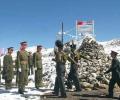
At the talks, the Indian side insisted on complete disengagement of Chinese troops at the earliest and immediate restoration of status quo ante in all areas of eastern Ladakh prior to May 5 when the standoff began following a clash between the two armies in Pangong Tso, they said.
Gen Rawat's comments about the supporting role of the Air Force came at a conference when asked about the growing perception that the Indian Air Force was not keen on setting up the proposed theatre commands integrating the capabilities of the three forces.

The armies of India and the US on Tuesday began an over two-week mega military exercise at a military facility in Uttarakhand with the aim of exchanging best practices and tactics in sync with growing defence ties between the two countries.
Xi said the entire military should devote all its energy to carry out all its work for combat readiness, enhance its capability to fight and win, and effectively fulfill its missions and tasks

In his petition, the vice admiral has challenged the government's move to ignore seniority and appoint his junior as the next chief of navy.

'The PLA is under constant watch.' 'There is an escalation matrix. For every degree of escalation, responses are thought of and trained for.'

On Monday China said it has "effectively managed and controlled" frictions in certain border areas.
The decisions were mentioned in a joint statement issued by the two armies late Tuesday, a day after the sixth round of Sino-India Corps commander-level talks that lasted for 14-hours.
Indian troops are defending every inch of the border with China and not even a single inch of land has been taken over by the neighbouring country in recent years, Ladakh Lt Governor Brig (retd) B D Mishra said on Thursday.
'India is not going to accept whatever the Chinese say. That is not going to happen.'

He was the army commander who planned Operation Bluestar. As army chief he planned Operation Brasstacks which rattled the Pakistan army. General K Sundarji was brilliant, ambitious and controversial, remembers Rahul Bedi.
'Our brave Indian soldiers don't reply to raining of bricks with mere sticks, they do so with iron rods'

Taiwan says it detected multiple Chinese aircraft and naval vessels taking part in military drills around the Taiwan Strait on Saturday, in what could be a possible simulated attack against the island.

Chinese and Indian troops clashed in Galwan Valley for several hours on the night of June 15 in their deadliest brawl in the last five decades.
"The meeting thus did not result in resolution of the remaining areas," the Army said in a statement.

'340 PLA soldiers were dead and over 450 injured -- bodies were strewn outside the bunkers, tossed behind the lines, buried in trenches.' A fascinating excerpt from Probal DasGupta's Watershed 1967: India's Forgotten Victory Over China.

India on Thursday once again called for completion of the disengagement process at the remaining friction points in eastern Ladakh to pave the way for both the Indian and Chinese troops to consider de-escalation and ensure full restoration of peace and tranquillity in border areas.

Until last month more than two-thirds of the Indian Army was deployed against Pakistan. Of 14 army corps, just four-and-a-half faced China, while more than twice that number was ranged against Pakistan.

The Army has also further bolstered overall surveillance mechanisms in all areas along the Line of Actual Control (LAC) in eastern Ladakh after foiling China's fresh attempt to occupy an area on the southern bank of Pangong lake, they said.

Chinese Foreign Minister Qin Gang reiterated that the situation at the India-China border is generally stable and both sides should consolidate the present achievements and strictly abide by the relevant agreements while pushing for further cooling and easing of the conditions for sustainable peace and tranquillity at the frontier.

After a gap of over two-and-half months, India and China on Sunday held the ninth round of military talks specifically focusing on ways to move forward on the long-negotiated disengagement process in eastern Ladakh as thousands of their troops remained deployed at friction points under freezing conditions.
The Indian side also told the Chinese delegation that the talks on disengagement should include Depsang as well as all face-off sites, insisting that it should be a simultaneous process and not a selective one.

'However, a lot of preparatory work would have to go in and China must be prepared to announce an end to the standoff by disengaging from the remaining areas along the LAC.'
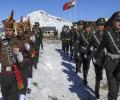
The major general-level meeting discussed ways to implement the disengagement of troops from Galwan Valley as agreed during high-level military talks between the two sides on June 6. The Indian delegation at the talks was led by Leh-based 3 Infantry Division commander Major General Abhijit Bapat. The two sides held Major General-level talks on Tuesday as well.

The Chinese and Indian armies continued with the disengagement process in the North and South banks of Pangong lake in eastern Ladakh as per plan and the entire pullback exercise is expected to take another six-seven days, sources in the defence and security establishment said on Monday.

'He was believed to finish his own work in an hour and spend the remainder of the time walking from one office to another, sitting down with the harried junior staff and helping them sort out the problems they were working on.'
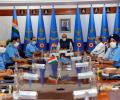
Rajnath appreciated the proactive response by the IAF in bolstering its operational capabilities over the past few months.

These missiles have a range of two to five km and they are capable of bringing down low flying helicopters and aircraft, they added.
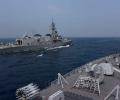
It said that the transit was "ongoing" and that there had been "no interference from foreign military forces so far."
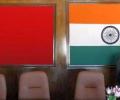
The Indian delegation at Thursday's talks is likely to be led by Naveen Srivastava, Joint Secretary (East Asia) in the external affairs ministry, they said.
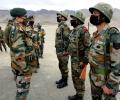
As per the sources, the discussions between the two sides include pulling back tanks and armoured vehicles from their present positions, and some development in this regard is likely to take place in the next few days.

The Chinese army's Eastern Theatre Command stated in a terse statement that it had conducted 'combined combat readiness patrols and joint firepower strike drills' surrounding Taiwan.

December 16, 1971. A Day Never To Be Forgotten.
'We hope the Indian side will work with China to follow through the important consensus of our two state leaders, abide by relevant agreements and treaties to de-escalate the tension at the border'
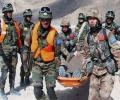
This is the first such incident along the border with China that Indian armed forces personnel have been killed after a gap of nearly 45 years.
The talks are being held with an aim of resolving the ongoing standoff in eastern Ladakh and reaching an agreement on the last remaining friction point in the Hot Springs area which had emerged post April-May 2020 aggression shown by Chinese troops along the Line of Actual Control (LAC) in Ladakh.
